TLDR
- Pure flat rate can create unstable income.
- Pure hourly often removes incentive.
- More dealerships are adopting hybrid pay plans.
- Technicians get guaranteed hours with unlimited upside.
- Good leadership still matters more than the pay plan itself.
Flat Rate vs Hourly
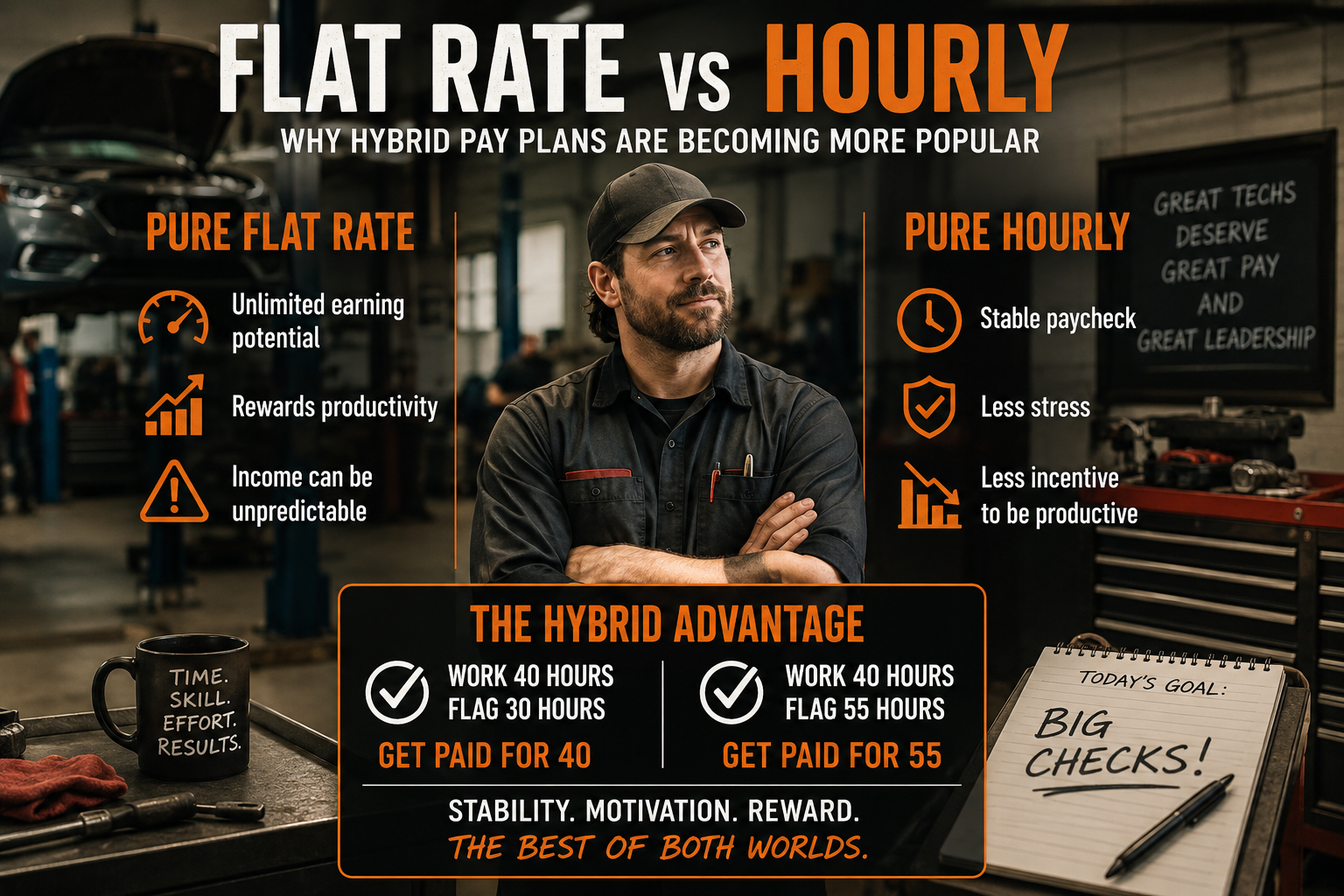
For decades, dealerships have argued over which pay system is better. Pure flat rate rewards productivity. Pure hourly rewards time. The problem is that both systems have flaws. Flat rate can produce incredible paychecks during busy weeks, but it can also punish technicians for things completely outside of their control. Hourly pay offers stability, but many managers worry that it removes incentive. As a result, more shops are beginning to experiment with something in the middle.
The Rise Of Hybrid Pay Plans
A growing number of dealerships now use a system that works like this:
- If a technician works 40 hours but only flags 30 hours, they still get paid for 40.
- If a technician works 40 hours and flags 55 hours, they get paid for all 55.
The system provides income stability while still rewarding productivity. For many technicians, it feels like the best of both worlds.
Why Technicians Like It
Not every week goes according to plan. Sometimes technicians get buried in warranty work. Sometimes parts are on backorder. Sometimes the shop is slow. Sometimes diagnostics consume an entire day. Under pure flat rate, technicians often absorb the financial impact of those situations. Hybrid plans help reduce some of that risk.
Why Some Managers Resist It
Many managers immediately respond:
That's understandable. But that may not be a compensation problem. It may be a leadership problem.
A Compensation Problem Or A Management Problem?
If technicians are consistently flagging 15 or 20 hours every week, management has to ask some difficult questions.
- Are we hiring the right people?
- Are we training properly?
- Are we dispatching fairly?
- Are our expectations clear?
- Are our wages competitive?
If a shop cannot attract productive technicians, the issue may not be the pay plan. It may be the shop itself.
The Best Technicians Still Want Incentive
Most high-performing technicians do not want pure hourly pay. They still want the opportunity to flag 60, 80, or even 100 hours. A hybrid system allows exactly that. The guarantee simply protects them from having one terrible week destroy their paycheck.
Could Hybrid Pay Become The Future?
No pay plan is perfect. But many technicians and managers are beginning to ask whether pure flat rate still makes sense in modern dealerships. Vehicles are becoming more complex. Warranty work continues to grow. Technician shortages remain a challenge. A hybrid system may not solve every problem, but it may provide a better balance between incentive and stability.
Know Your Numbers
Whether you're paid flat rate, hourly, or somewhere in between, one thing remains true: Know your numbers. Track your hours. Track your efficiency. Understand your earning potential. Because the more data you have, the better decisions you can make about your career.